
Let me ask you a simple question: are you poor?
There’s an 8 out of 10 chance you are one of the poorest people in the world. Not when it comes to your salary or bank account but your time. You have too many things to do and not enough time to do them. No matter your net worth, you are likely time-poor.
This means 80% of employees within your organization, yourself included, experience the debilitating effects of being time-poor. How do you think this time poverty impacts the company’s productivity and profitability?
Consider this: 50 percent of working Americans report feeling “always rushed,” while a staggering 70 percent claimed they “never” have enough time. People who are time-poor also report being less productive, less happy, and more stressed out.
TIME POVERTY IS A RESULT OF HOW WE THINK ABOUT AND VALUE OUR HOURS. WHEN WE ARE UNAWARE OF THE BEST USES OF OUR TIME, WASTING IT BECOMES THE DEFAULT.
Identify Your Time Traps
The first step in becoming time-smart is to identify the time traps in our day. In a recent article, Ashley Whillans highlighted six common traps – which is constraining your time wealth?
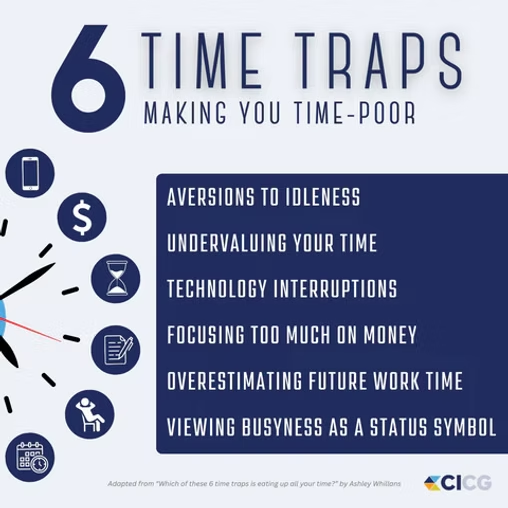
AVERSION TO IDLENESS
Humans were not built for moments of idleness or downtime. We don’t know how to relax when we’re not being productive. However, moments of rest and reflection are critical for recharging our energy and creativity levels.
UNDERVALUING YOUR TIME
We often protect our money at the expense of building our time wealth. Because it is hard for us to measure time’s value, we reflexively go for low-cost options despite the extra time they take.
TECHNOLOGY INTERRUPTIONS
Technology breaks our hours into confetti: little seconds and minutes lost to texts, notifications, and alerts. Each interruption breaks our focus and productivity, requiring additional cognitive recovery time to get mentally back on task.
FOCUSING TOO MUCH ON MONEY
While financial stability is important, obsessing over money can cause us to neglect those activities that contribute to our overall well-being and fulfillment. Becoming wealthier does not make us more time affluent.
OVERESTIMATING FUTURE WORK TIME
We believe we will have more time tomorrow than we do today. However, the best predictor of how busy we are going to be tomorrow is how busy we are right now.
REGARDING BUSYNESS AS A STATUS SYMBOL
Being busy is often equated with success or importance. It’s an odd badge of honor we wear with pride. And often as employers, we are guilty of rewarding busyness instead of productivity.
Once you’ve identified your time traps, 80/20 becomes a powerful tool to help us prioritize and take back control of our time. Unsure how to do that? Reach out for help!
Source: Whillans, Ashley. “Which of These 6 Time Traps Is Eating up All Your Time?” Ideas.Ted.Com, 5 Nov. 2020, ideas.ted.com/which-of-these-6-time-traps-is-eating-up-all-your-time/.
FAQs
What is time poverty?
Time poverty refers to the feeling of having too many tasks and not enough time to complete them. People who are time-poor often feel rushed, stressed, and unable to focus on important or meaningful activities.
What are the most common time traps that reduce productivity?
Some common time traps include technology interruptions, undervaluing personal time, avoiding downtime, focusing too much on money, overestimating future work time, and treating busyness as a symbol of success.
How do technology interruptions affect time management?
Frequent notifications, messages, and emails interrupt concentration and break workflow. Each interruption requires time to refocus, which lowers productivity and increases the time needed to finish tasks.
What is the 80/20 rule in time management?
The Pareto Principle states that roughly 80% of results come from 20% of efforts. By identifying and focusing on the most impactful tasks, individuals can use their time more efficiently.
How can you become more time-smart?
You can become more time-smart by identifying your time traps, prioritizing high-impact tasks, reducing distractions, scheduling focused work time, and allowing regular breaks for rest and creativity.